
1. Introduction

Humans, since pre-history, have adorned themselves with ornaments and jewellery of different kinds. The purposes behind wearing them varied from social norms to vanity, from gendered customs to ostentation. The most intricately designed ornaments were lavishly expensive and adorned by nobles, and were made out of gold, which is less monetarily accessible than silver. Hupari, a settlement 24 kilometres from the Kolhapur district of Maharashtra, is renowned for its silver jewellery, not just in Maharashtra but across India. This craft of silvermaking is inferred to be of recent origin since the District Gazetteer of 1884 is devoid of any mention of this craft practice.

The predominance of silversmithy in Hupari is intriguing because the village is not home to raw materials of silver, copper, or gold, nor is it in the vicinity of major markets for those jewels. The silver is purchased from Kolhapur and usually brought by the customers to the karkhana owners. The primary marketplaces for these ornaments are in Delhi, Agra, Pune, and some other major cities. According to the 1961 census, 34.70 per cent of the total workers are engaged in the craft of silver-making, which highlights its significance. Silver jewellery, ranging from anklets, chokers, rings, temple ornaments, etc., is significantly made in Hupari. This is a labour-intensive industry, like almost all traditional crafts, and employs several thousand women and artisans.
2. Reconstructing The Historical Trajectory

Historical records deconstructing the initiation and development of this silver-making craft vary in their findings. As per Ar. Shubhayan M, the silver industry was abundant in this area around the 13th century, and it reached its apogee after Ambabai temple completion in mid mid-16th century. Around 1912, there were some goldsmiths in Hupari, and among them was Shri Krishnaji Ramchandra Potdar. He motivated other smiths to incentivise capital to make ornaments. His son, Shri Waman Krishnaji Potdar, continued his father’s legacy and was deeply interested in craft and craftpersons’ betterment.
Potdar introduced machines to make silver ornaments, which broke all barriers—skilled, semi-skilled, and even unskilled labourers could work due to this. He left for Kolhapur in 1926, leaving Hupari with 40 craftspersons from all castes. As modernity drew closer, caste barriers began to blur in this craft. Earlier, only the Sonar community could work, but now Brahmin, Maratha, Kumbhar, Mahar, Jains, and Muslims could work too. After the Second World War, this craft expanded further, and many new designs were introduced by craftspersons. There is not much place for superstitions or even a traditional story amongst practitioners since this craft was popularised after the First World War.
3. Production Techniques for Ornaments
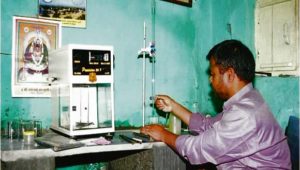
Silversmithy at Hupari is heavily mechanised with rigorous division of labour. Some women make the chains from the rings or prepare what is called bittis, which are subsequently converted into hollow, round balls by skilled men. As per the 1961 Maharashtra Census, there can be four ways in which silver-making is categorised: Silver-melting, Silver strip and wire drawing, Press machine, and Assembling.
3.1 Raw Materials and Tools
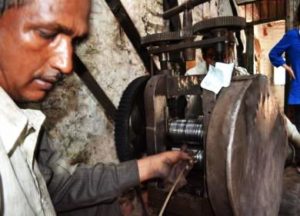
For melting the silver (also called Atni), Hard coke, Navasagar (Sal ammoniac), and Charcoal powder are required, along with crucial tools like a hammer, tongs, wooden pots, Sali or a long iron rod to stir the molten silver. In the strip and wire section, also referred to as Pashta and Sut, no raw material is required as it is a labour-based work. Strip drawing machine, an electric motor, a set of weights and balances, a furnace, scissors, and a hammer are the tools required. For the third stage, called the Press machine, services are given to customers’ demand, and it requires no raw material. Herein, various designs on the silver strips are cut via tools like a fly press machine, dies, an electric grinder, and a file. In the Assembling section, the silver wire is rolled in a spiral manner in the shape of a rope and is cut into circular pieces or rings. The tools used in this are: hand drill machine, tongs, hand stove, iron pot, etc. Raw materials utilised in this section: zinc, brass, borax, solder pieces, kerosene oil, sulphuric and nitric acid.
3.2 The Manufacturing Process
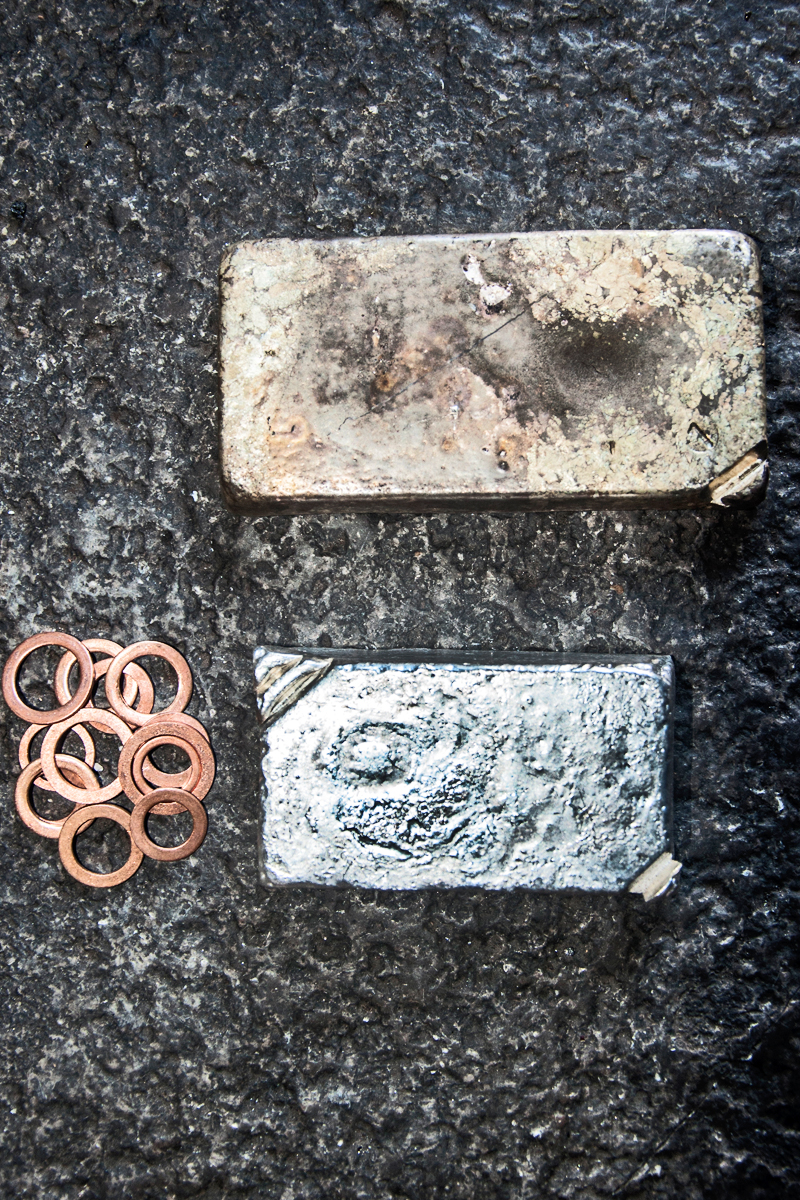
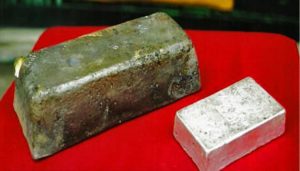
Initially, the silver blocks of the necessary weight are melted in terracotta pots using charcoal and coal. This process is typically done in the early morning to avoid the heat of the afternoon. Casting frames are coated with groundnut oil, and the molten material is poured into them, allowing it to set in the shape of rods. The silver rods are then immersed in water and fed into a rolling machine to create strips of silver and silver wire for the design cutting process. According to the desired designs, the strips and wires are processed through a press tool machine to achieve the necessary design and pattern on the silver.
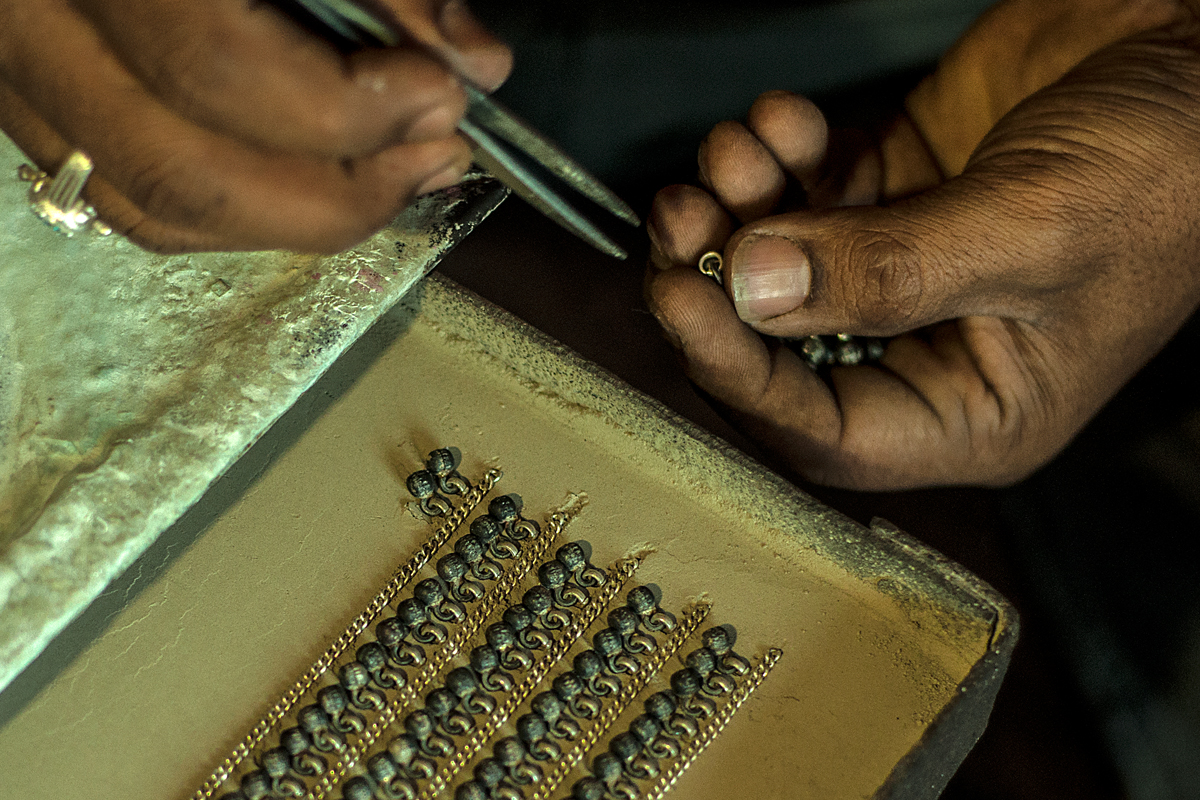
The designs are connected by soldering based on the number of strings and beads of various shapes. The components of the silver jewellery are positioned together with the aid of a frame and holder to keep the parts aligned—this is called the Chaadi process. Once all parts are arranged, the material is heated with a flame burner to about 700 degrees, a process commonly referred to as Jaali. During this, the material darkens, and ornaments undergo rough polishing in a drum containing a soap nut solution, fibre balls, and water. Only certain parts of the ornament are colored with enamels, known locally as meena colour, which is typically sourced from Agra. It is thoroughly dried, designed by the artisan, and then dried. The silver products are polished using an electroplating vibrator to obtain the ultimate finishing touch.
4. Ornament Varieties and Motifs

A myriad types of ornaments are created with Hupari silver. These are: head ornaments locally called Hair pin, Akda, Bindya, Veni, Gajra, ear ornaments like Chawkadiya and Chawphuli, pieces for the neck like mangalsutra, eksar, sari, har, arm pieces like bracelets, bajuband, and more, anklets like tordi (payal), sankhali, and much more. Payals are most widely circulated, and it has four traditional types: Rupali, Gajashree, Sonya, and Gajashree chum chum. Some of the motifs used in crafting the silver ornaments include Koyna (a mango-like design), Pankha (bird wing motifs), Topi (circular designs resembling a hat), Shankh (conch), and Pari (a triangular-shaped designer motif inspired by maritime corals).
5. Conclusion: Present Conditions and A Way Forward
In November 2021, the Chandi Karhandar Association applied a Geographical Indication (GI) tag to patent the authenticity and protect against counterfeiting. This certificate is valid for ten years and has significantly increased the marketability, and is increasing in exports and value. Several skilled workers from the area came together to form the Hupari Chandi Karkhandar (Udhyojak) Association, and in 2001, the association was allotted 200 acres of land in the Kagal, Hathkanangle industrial area, which was declared as the Silver Zone, Hupari. Approximately 75% of the village within the geographical area of Hupari is in the silver jewellery industry. This industry developed into a refined and comprehensive craftsmanship among the residents of Hupari. However, conservation and preservation of this regional craft, along with the need to popularise and make its supply extensive, is of utmost importance.
References:
- M, A. S. (2019, November 13). The Silver City of India- Hupari, Maharashtra. Sthapatya. https://sthapatya.co/the-silver-city-of-india-hupari-maharashtra/
- Das, T. (2025, February 4). Did You Know How This 1900-Year-Old Craftsmanship from Maharashtra Got GI Tag? Local Samosa. https://www.localsamosa.com/business/histry-of-hupari-silver-craft-8660526
- THE MAHARASHTRA CENSUS OFFICE, BOMBAY. CENSUS OF INDIA 1961 VOLUME X, MAHARASHTRA, PART VII-A (6-7). HANDICRAFTS IN MAHARASHTRA, SILVERSMITHY AT HUPARI
- Prof. Bibhudutta Baral, Divyadarshan C. S. and Lija M. G. (2021, April 21). D’Source Design Resource on Silver Ornaments – Kolhapur. D’Source. https://www.dsource.in/resource/silver-ornaments-kolhapur
- Geographical Indication Registry. https://www.search.ipindia.gov.in/GIRPublic/Application/Details/792