



Introduction

In the narrow lanes of Kasba Peth, the oldest of the 18 wards of Pune, lies the Tambat Ali, i.e. alley of centuries-old coppersmiths. In Marathi, Tamba signifies ‘Copper,’ and Tambat Ali is the abode of these craftspersons who engage in copper object making. Spatially, Tambat Ali is a labyrinth of dilapidated houses of brick and mortar, chowks, and raised platforms on roads for informal gatherings.

As the oral memory goes, the Tambats (people residing) trace their collective lineage to Vishwamitra, the divine architect. Bakkhal (Marathi for open space) is a settlement built for copper workers to work freely. This was constructed for tambats as an agglomeration for practising their work in the open courtyard with workshops organised on its peripheries. When it was first established in the 20th century, it had 40-50 workers; now reduced to about 20.
As this copper craft developed majorly when Peshwas and associates patronised it, the coppersmiths made a lot of weapons and cannons for the ruling elite. Coppersmiths make various objects like: glasses, candle-holders, incense-holders, paraphernalia for worship, jewellery, jars, Bamba: indigenous water heaters, and more. Copper, along with being a civilisational landmark of the Bronze Age across world history, has immense traditional, medicinal, and spiritual value in the Indian sub-continent.
Tambat Ali: Emergence and Development

As per popular collective history, the original ancestors of tambats resided in the Konkan coastal regions. During the regnal years of Sawai Madhavrao (1774 – 1795), these people shifted to Pune. The subsequent rulers sought to expand the Maratha territories and make Pune a potential capital city. For this purpose, they invited traders, craftspersons, and bankers to settle in Kasba Peth and the surrounding peths of Pune. According to other sources, early coppersmiths also made items required for naval equipment and paraphernalia of Kanoji Angre, who was the naval chief of Chhatrapati Shivaji’s navy.

After the dawn of the colonial regime in the Bombay Presidency, as mentioned in the Gazette of Bombay of 1884, the business of copper started to ascend. This gazette remarks about the vessel-building practices of Twastha Kansara, or the term formerly used for Tambats. Anantrao Godambe established the Pune Metal Workers Factory in 1888, which gave a different boost to the metallurgy industry with automation integration. In the 1960s, over 300 households practised this profession. Bambas or water heaters and water vessels of copper were widely used for storing water in Wadas of Pune (open courtyard residential houses), as they kept water clean for days and also, as per collective memory, helped in stomach acidity.
Artisans, Caste, and Associations

As per the directives established by the Ministry of Social Welfare and the Ministry of Social Justice and Empowerment, the Tambats of Maharashtra are categorised as OBC (Other Backward Classes). Tambats also consider themselves to be Brahmans, practising many traditional Brahmanical rituals like wearing the janva (sacred thread) and munja (granting the right to study Vedic scriptures). The Tambats have set up Twashta Kasar Samaj Samstha Kalika Mandirs in every town where they reside, historically, which serve as community centres for organising events. These Twashta Kasars have been pompously celebrating Ganeshotsav in Pune since 1893.

French anthropologist Louis Dumont links the caste and profession of an individual to their social status and hierarchy in society. This is crucial to Indian society in the context of the Tambat caste. The Tambats are involved in making utensils and objects, which are later utilised for divine worship of Ganesha and Shivalinga. However, there is much separation between caste and occupation. The Tambats, many, exist as Tambats via their work and not as their caste. Their work identity and caste identity do co-exist independently.
Tambachye Bhande (Copper Utensils): Processes and Techniques
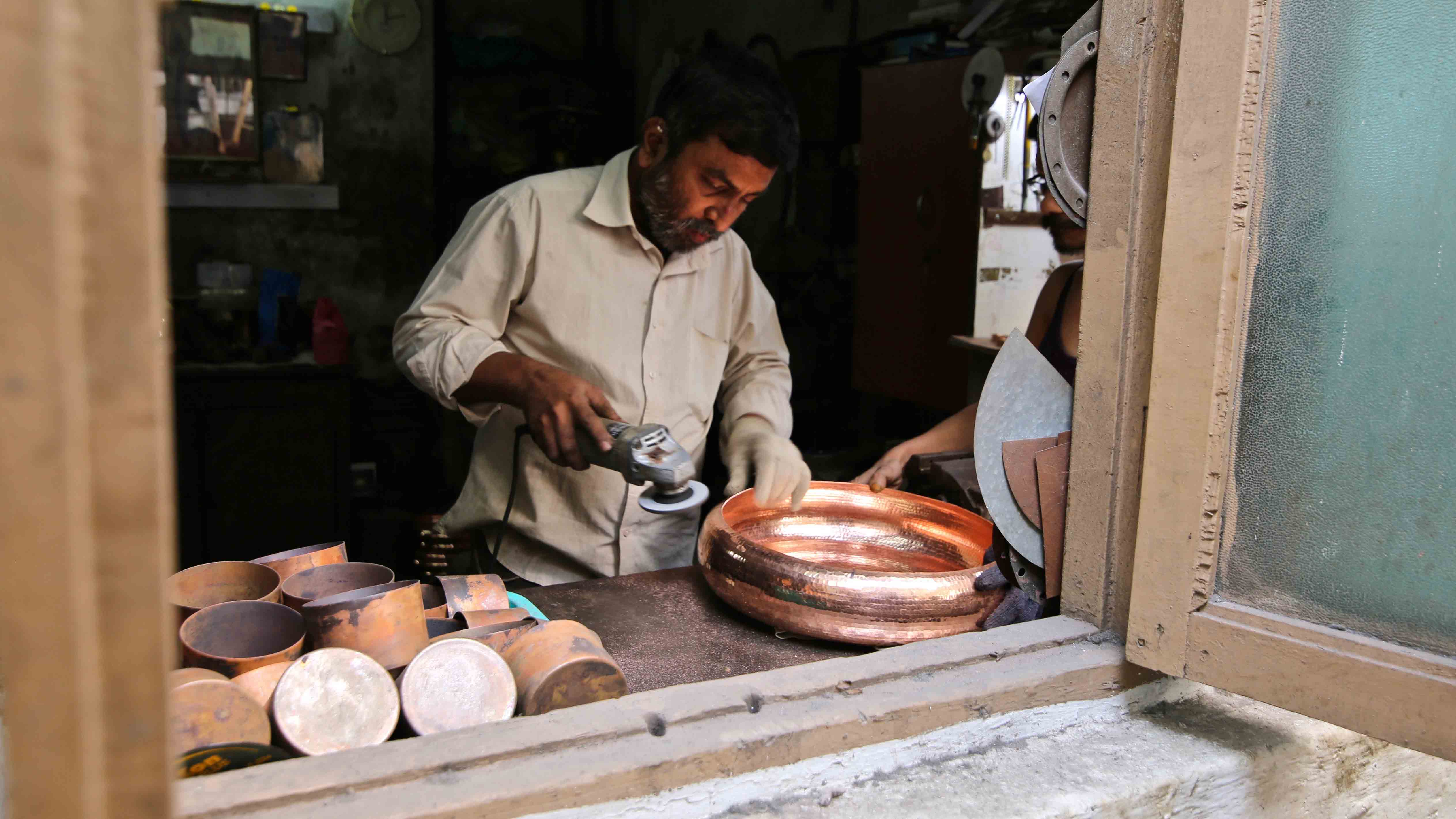
These hand-made copper vessels are made firstly by rolling machine, which is very large in setup, and in it, the scrap copper is rolled into smelted into sheets of copper.
ATARKAAM: The copper sheets are cut based on the shapes and desirable qualities of the object to be made.
GHADKAAM: The copper is sunk, raised and shaped
JODKAAM: Joining is accomplished through methods such as nipping, brazing, and hammering. The positioning of joints depends on the vessel’s design, its intricacy, and the strength needed.
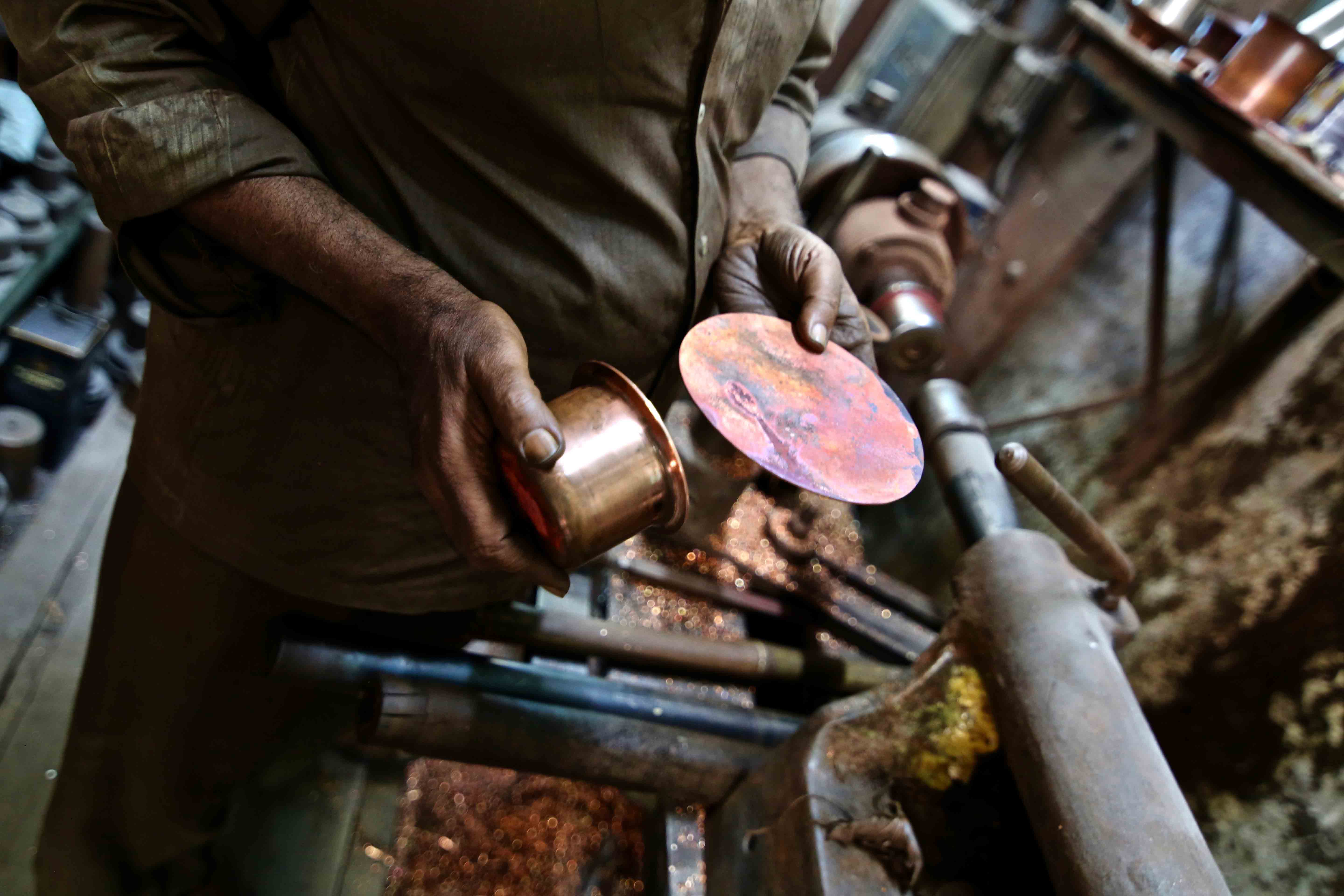
After these processes, parts of the object are dipped in acid to remove excess sulphates and oxides; various patterns and dots are added to aestheticise the object of copper; and finally, a tin coating is done to avoid reactions with food. Procedures differ significantly for making Bumba, i.e. water heater, Niranjan – Small lamp, Kalshi – Small pot, Ghanti – Hand-held bell, Puja thali – Prayer offerings plate.
Belief and Faith of Tambats
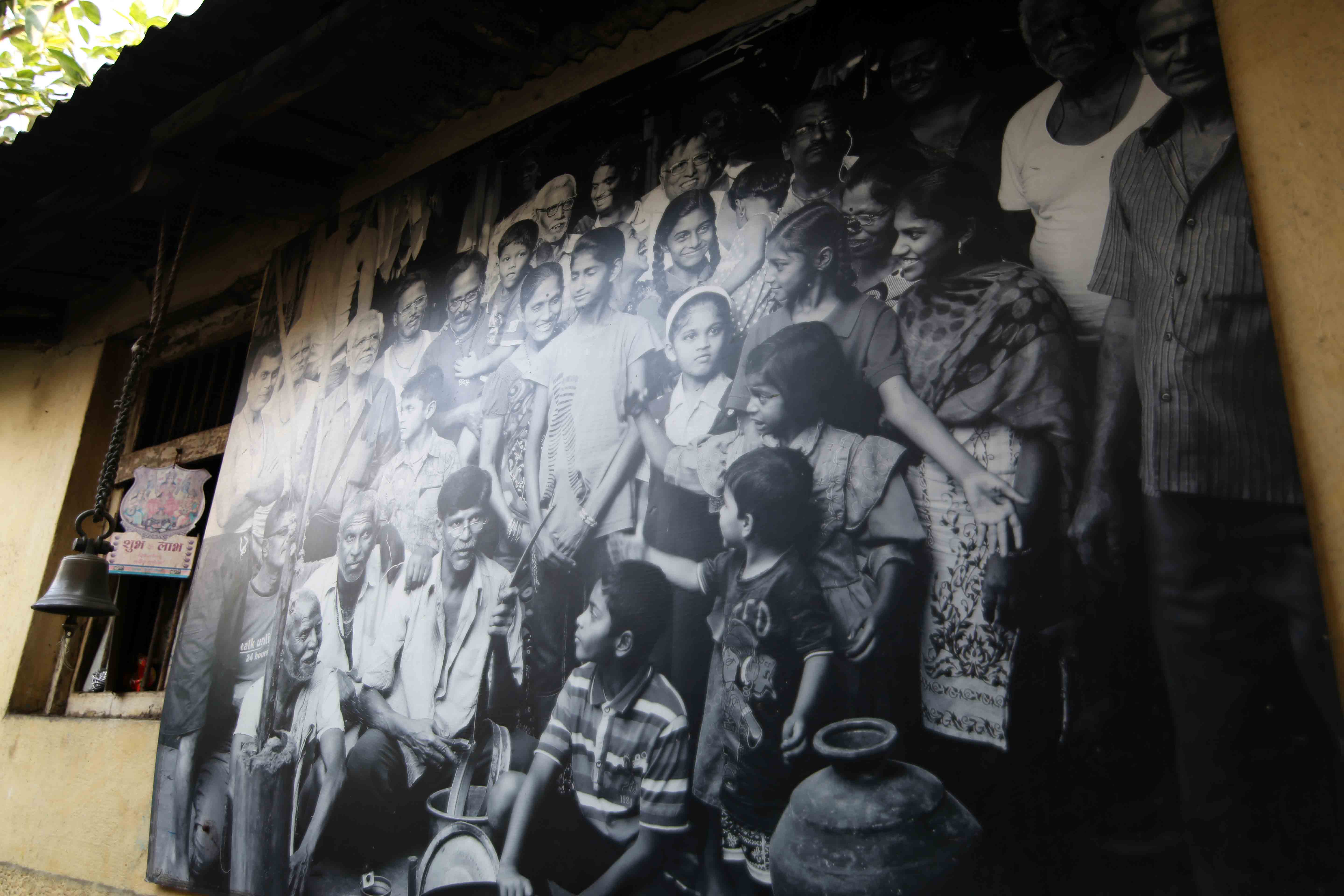
The Tambats, as mentioned before, view themselves as the descendants of Vishwakarma, the Hindu deity who is considered the celestial architect of the cosmos, and he is said to have five sons and two daughters. The Tambats believe themselves to be descended from his son Twashta, the skilled metalworker. Tambat’s residence featured eight pillars at the north-west corners, creating a shrine. This space was designated as a puja-ghar for various deities. During Nag-Puja, married women in the household present offerings such as fruits, modak, and ghee to the god each month. In many locations, water tanks are adorned with hibiscus flowers, which are deemed sacred and are used for daily water purification.
Conclusion: Contemporary Conditions in Tambat
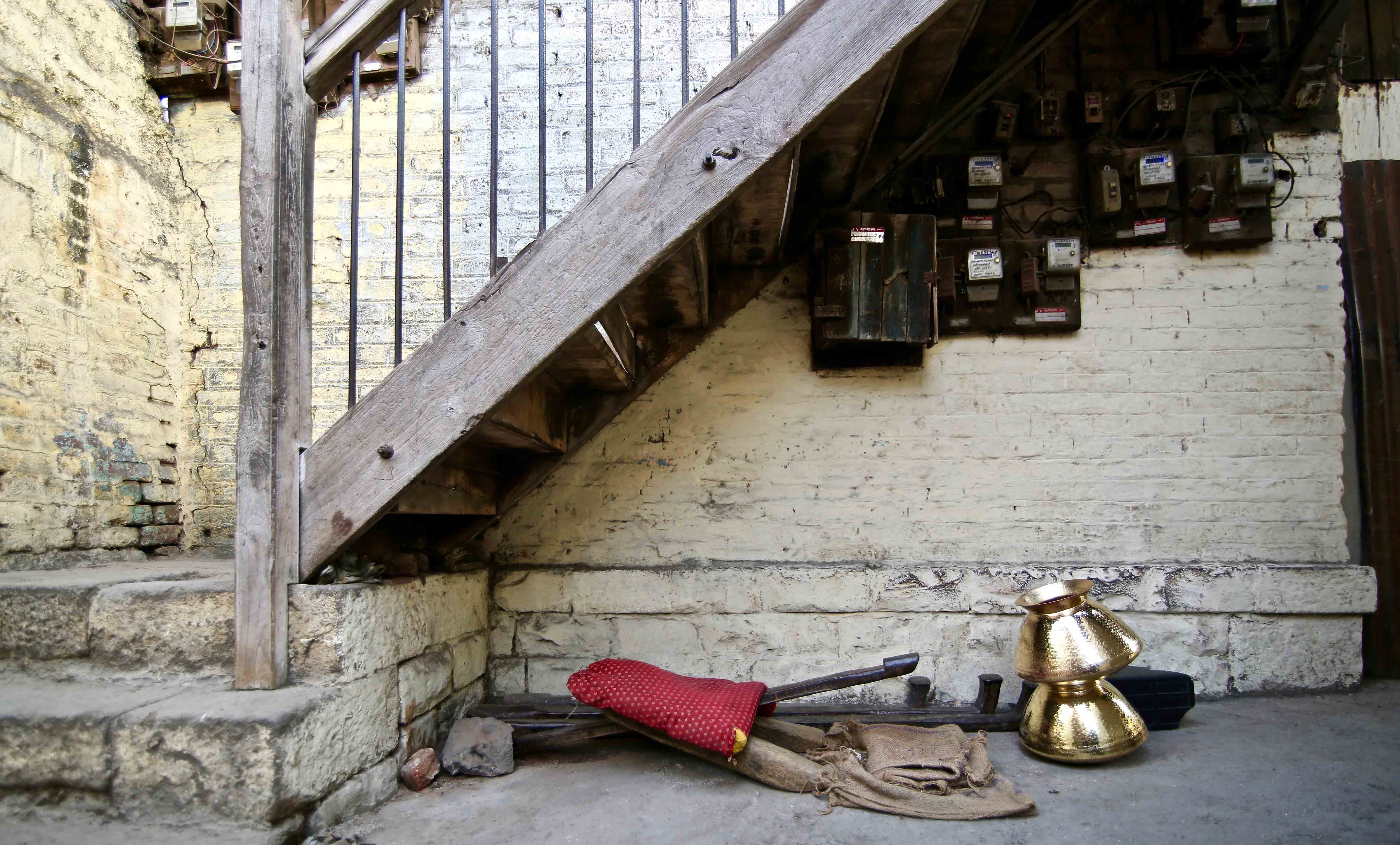
According to anthropologist Alfred Gell, objects have agency and affect the way people perceive the world. Therefore, these copper objects of Tambat Ali in Pune are more than just utensils—they influence the lives and lifestyle of the Tambats. Tulsi Baug is a local market wherein copperware is sold by the craftspersons or sellers. Since it is a draining occupation with physical labour involved, the custodians of craft are often afraid that this might be the last generation of coppersmiths in Tambat Ali. In 2017, Twastha Kasar Samaj celebrated its centenary. This community, spread over other areas like Nashik as well, doesn’t just exercise copper-making for sustenance; it practices this tradition for honing, honouring and continuing this legacy for generations ahead.

Ventures like Anandi Sansar, which is a small ‘museum’ in Kasba Peth, is an abode to a collection of 1000 artefacts of brass, copper, and silver is certainly a testimony to the Tambat community’s widespread reach. With the support of INTACH, designer and heritage conservationist Rashmi Ranade, and Forbes Marshall, this craft has been revitalised by incorporating contemporary designs while preserving traditional methods. However, more fervour, rigorous push, and optimistic marketing are heavily required for this artisanal heritage to survive.
References:
- UCL (University College London). (n.d.). Copper in Tambat Ali: Design, Craft, and the Transformative Properties of a material in Pune, India – UCL Discovery.
- The Last of the Tambats: A Photo Essay | Sahapedia. (n.d.). Sahapedia. https://www.sahapedia.org/the-last-of-the-tambats-photo-essay
- The Story Of Copper Art. pubhtml5.com. (2021, December 21). 7. CRAFT DOCUMENTATION.
- Wayal, A. (2025). DOCUMENTING ARCHITECTURE & TRADITIONAL VALUES documenting architecture and traditional values of Tambat community of Kasba, Pune. Mitid.
- Making copper products in Pune – Google Arts & Culture. (n.d.). Google Arts & Culture. https://artsandculture.google.com/story/making-copper-products-in-pune-dastkari-haat-samiti/AgXRHWQWa_hyIA?hl=en
- Sahapedia. (2018, November 28). The coppersmiths of Tambat Ali, Pune [Video]. YouTube. https://www.youtube.com/watch?v=PWZroLfZS4s
- Kevinstandagehotography. (2022, April 23). Tambat Ali – The Coppersmiths of Pune. Kevin Standage. https://kevinstandagephotography.wordpress.com/2022/04/23/tambat-ali-the-coppersmiths-of-pune/
- The artisans of Tambat Ali — Sagar Shiriskar. (n.d.). Sagar Shiriskar. https://www.sagarshiriskar.com/the-artisans-of-tambat-ali
- Nath, D. (2025b, November 30). In Kasba Peth, one of India’s smallest museums holds a treasure trove of history. The Indian Express. https://indianexpress.com/article/cities/pune/kasba-peth-india-smallest-museums-treasure-trove-history-10392529/
-
Arts and Crafts | puneheritage.defindia.org. (n.d.). https://puneheritage.defindia.org/arts-and-crafts/