
Introduction
Take a seed of mustard (rai or Sarshau) and drop it in a saucer, and observe the way the seed revolves around it. Rai Dancers also dance in unison to the beat of traditional music instruments. Rai dance is the folk dance of Bundelkhand. Folk dance originated in rural communities to celebrate the harvest and festivals. It is to develop a deep connection among the people of communities. Bundelkhand lies in the center of India, often referred to as the heart of the nation. The region has developed its own version of folk traditions, culture, customs, folk art, folk music, and folk dance. Due to a lack of education and economic backwardness, this region received less attention and concern from the media and academia, which has led to a lack of reflection on its folk culture and folk arts. So it is important to promote classical Rai dance to preserve its traditional significance beyond the regional boundaries.

Root in Bedia Community: Historical Origin
The Bedia community is synonymous with rai dance. Bedias or Beriyas perform the Rai dance on several occasions, which are unique to their community. Bedias are basically known to be traditional entertainers and dancers. Russel mentioned Bediyas,” A caste of vagrant found in various parts of the province”. The Rai dance began as a court dance. The Bundelkhand region is known for its heroic stories and songs. Rai dance was inlinked with heroism. After victorious battles, it was the rhythmic, swirling steps of Rai that announced celebration. Villagers recall how, after times of war or adversity, the community gathered and Bedni dancers would whirl, their feet raising dust—a symbol of hope and resilience.
People said that amid every big harvest, or after heavy rains that broke the region’s dry curse, Rai dancers poured into open spaces, while elders beat dholaks and sang traditional couplets. Rai is offered by women, especially from marginalized communities. Over time, the dance became imbued with caste prejudices and economic marginalization. Especially under British colonial rule, the dance of the Bedia tribe led to a heavy social stigma. Being a Rai dancer was often equated with being part of the prostitution trade.
Steps, Music, and Storytelling
Rai starts slow, building rhythm with feet and waist movements almost hypnotic in their repetition. The more dancers sway, the more the music intensifies. Dholak, nagada, manjeera, Ramtoola, and harmonium, all local instruments, create a soundscape. The woman and man sing the song of rain and harvest. They pray to god Ram and goddesses Sita through their lyrics of songs, or play on the theme of lord Krishna with gopis.

The lyrics often use playful jokes and rural wisdom. For example, a classic song
“Gori nainan ke teer, gori nainan ke teer, daiyo na mar jein gailaarey… Ghunghta na dayo rey, mar jein gailaarey…Gori naina na maar, gori naina na maar, bharke dunali chahe mardey…” source Gaon Connection.
Symbolism in Costume, Colors, and Veils
Dancers wear 9- 12 meter bright colors ghagras (skirts) so wide and long that they resemble waves of color in the air when dancers move their skirts on the beat of music. The color of their costumes symbolizes red for energy, yellow for prosperity, and green for fertility. They wear traditional and heavy silver anklets (ghugru), bangles, and necklaces. Kardhani and paijana are important ornaments to be worn while rai dancing. Ghoonghat Veils covering the dancers’ faces symbolize, traditionally, a marker of modesty and respect, but also a visual motif in Rai, lending mystery and dignity. Rai’s costumes and ornaments reflect not mere beauty, but the status and hopes of rural women. Every adornment tells a story of celebration, struggle, and pride.
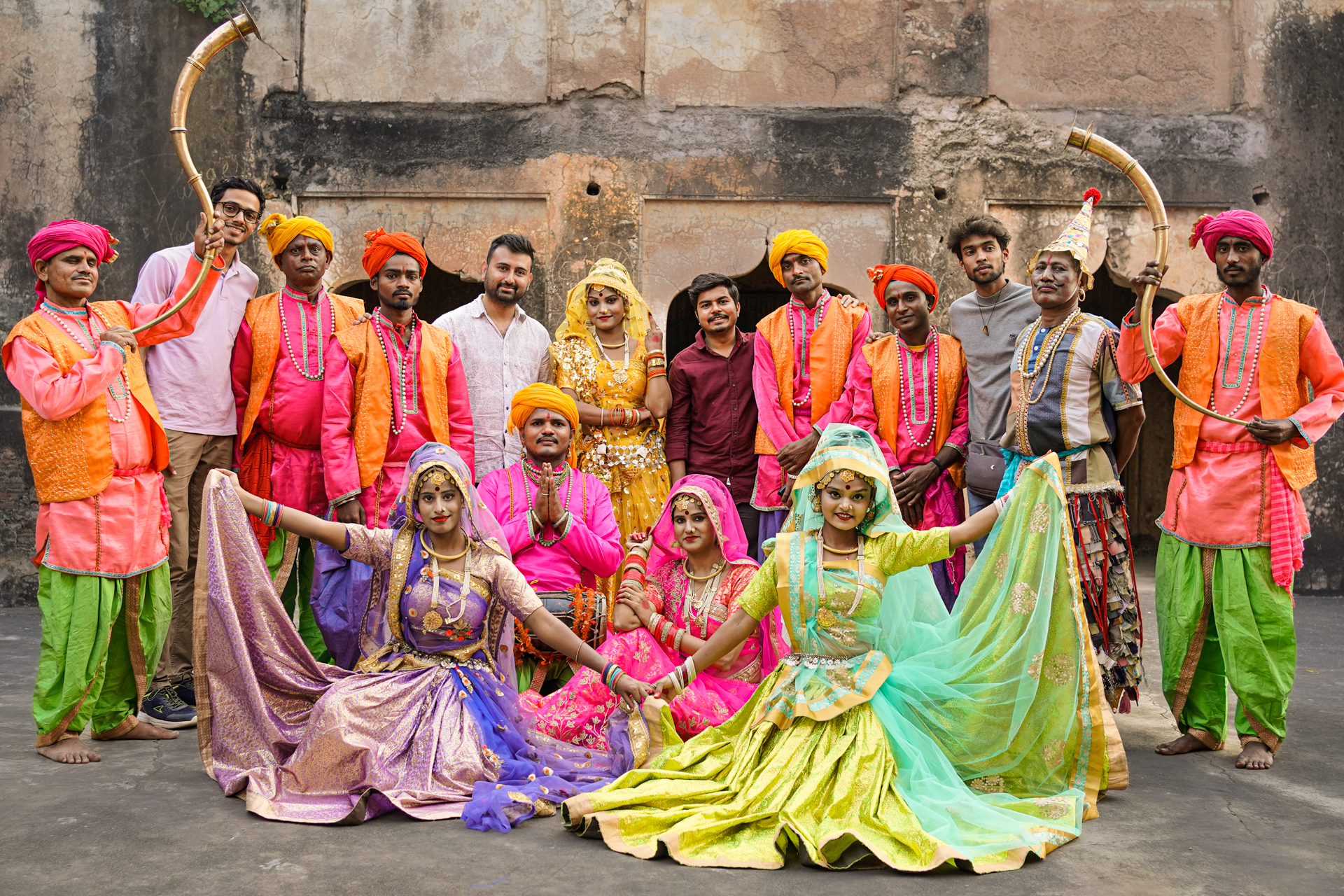
Motifs: What Makes Rai Unique
Dust: Renewal, resilience, and the way hard times turn into joy.
Mustard seed: Small beginnings leading to uproarious, collective celebration.
Circle: Cyclicality, community, unending tradition.
Swirling skirts: Fluidity of life, emotion, and water (mirroring the long-awaited monsoon).
Stigma and struggle for dignity
Due to poverty, many girls entered the profession of Rai dancing at an early age, 12 or 13. Dance association sensational, vulgar lyrics, suggestive moves, revealing clothes, and male-dominated audiences blurred the line between performance and sexual commerce. Rai dance is described historically as an “entry ticket into prostitution”. Lower-caste women are often exploited by higher castes while dancing at their home party. Organizing it in their house’s function was considered a social symbol in the villages.
Men from other communities often boycotted Rai performers, and their families faced social exclusion. Rai performers Padma Shri awardee Ram Sahay Pandey recall how even crossing caste or community lines was considered a rebellion, facing ridicule and social boycotts.
The Shift: Empowerment and Rehabilitation
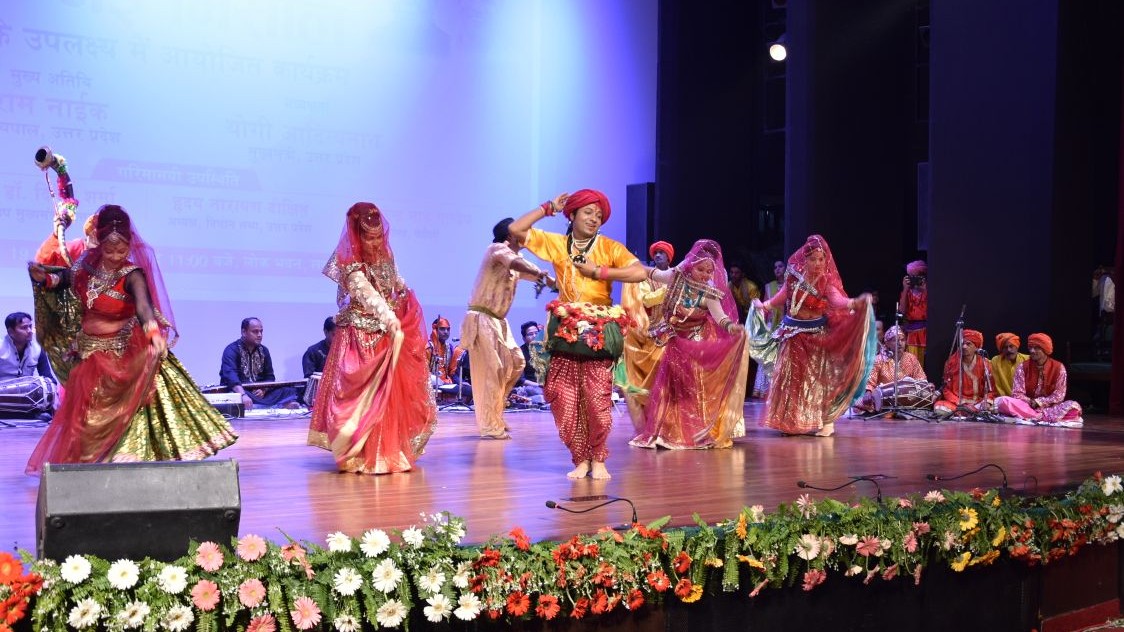
In recent decades, significant changes have emerged. First, the stigma began to change through cultural revivalists and government initiatives. Social workers highlighted Rai’s artistic value rather than its association with sex work. Rai is now performed by both women and men. Now, Rai has been learned by men and women across castes and outside the Bedia community. Younger generations, like Radha Prajapati’s group in Jhansi, work to sanitize lyrics. She emphasizes traditional choreography and asserts the dignity of Rai as pure art. Her group alone from Bundelkhand to perform in Namste Trump and the Dubai Expo. Now Rai dance is also performed in the cultural and annual functions of colleges and schools in the Bundelkhand region.
Governments and NGOs have provided alternatives for livelihoods. They encouraged formal education and developed employment schemes for Bedia women. The government supports it by organizing workshops and performances at official events. Rai dance is being featured at international venues. Gradually, many women have left prostitution. The girls are being educated to secure jobs. They are becoming part of mainstream society.
Conclusion
The journey of Rai from beginning as a sacred communal ritual to misunderstood performance passes through stigma and back toward pride, showing their struggles and resilience. Today, Rai stands as a respected dance. It is a living chronicle of survival, celebration, and transformation in Uttar Pradesh. Through each swirling skirt, every rising cloud of dust, and every note of the dholak, Rai declares that ancient roots can grow new hope and that Bundelkhand’s story will keep spinning into the future.

References:
- Kumar Bharti, Jitendra, 2020, A Social and Cultural Overview of Bundeli Folklore, The Creative Launcher, vol. 5, núm. 1, abril, pp. 37-43 Perception Publishing
- Rajpoot Neha, 2018, The Traditional Rai dance of Madhya Pradesh, published by Indian History Congress. https://www.jstor.org/stable/26906334
- Della L. Ruchela et.al., 2022, A life-course perspective of sex trafficking among the Bedia caste of India, published by the University of Nebraska – Lincoln. https://digitalcommons.unl.edu/cgi/viewcontent.cgi?article=1374&context=famconfacpub
- Gupta Shivani, When women dance like mustard seeds: Come, sway to the Rai folk dance of Bundelkhand (https://www.gaonconnection.com/
- https://www.prabhatkhabar.com/state/uttar-pradesh/lucknow/bundelkhand
- https://anahad.ngo/radha.
- https://www.amarujala.com/uttar-pradesh/jhansi/rai-dance-traditional-folk-dance-of-bundelkhand-prof-alka-jhansi-news-c-308-1-sjhs1001-102483-2024-10-15
- https://archive.org/details/dni.ncaa.CCRT-721-SP
- https://www.orchidsinternationalschool.com/blog/folk-dance-of-uttar-pradesh
- https://apnichanderi.in/blog/the-vibrant-rai-dance-of-chanderi-a-celebration-of-culture-and-heritage-1723649225140