
Introduction
Folk songs are a vital part of the culture of the Tamil landscape. Right from devotion, supernatural elements, politics, economy, to gender, folk songs give a clear representation of the culture of the ordinary people at different eras. The rhythms and tunes of the music echo the lands. This article deals with some of the themes of folk music in Tamil Nadu and how they help us decode the everyday lives and struggles of the people.
Famine and Tamil Folk Songs.
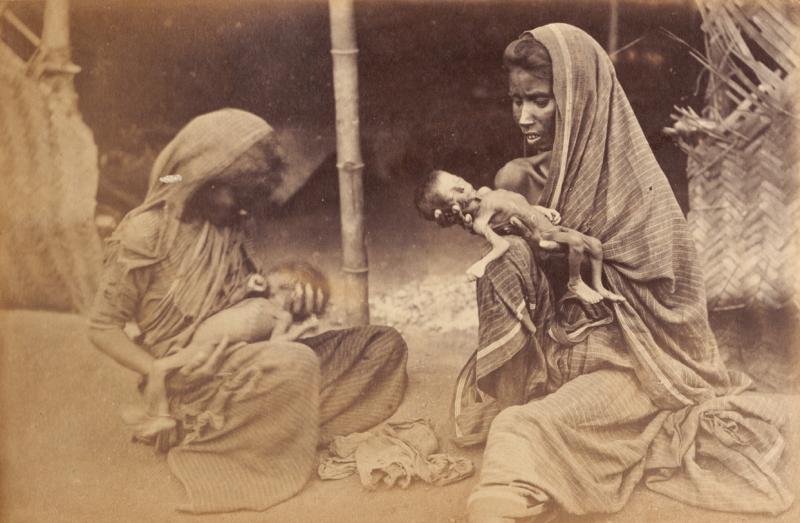
Recurring famines during the British colonial period claimed the lives of thousands of people and starved the rest. The people were left without any basic amenities; people turned against each other, putting human values at stake. The system of indenture, slavery and penal contracts was not merely about economic exploitation but about establishing a rigid social order that placed the workers firmly at the bottom of the hierarchy. Violence was used as a tool to enforce compliance, prevent desertion, and maintain control over the workers. And one of the cruel, violent acts of the time was starvation.
Mulai Pari :
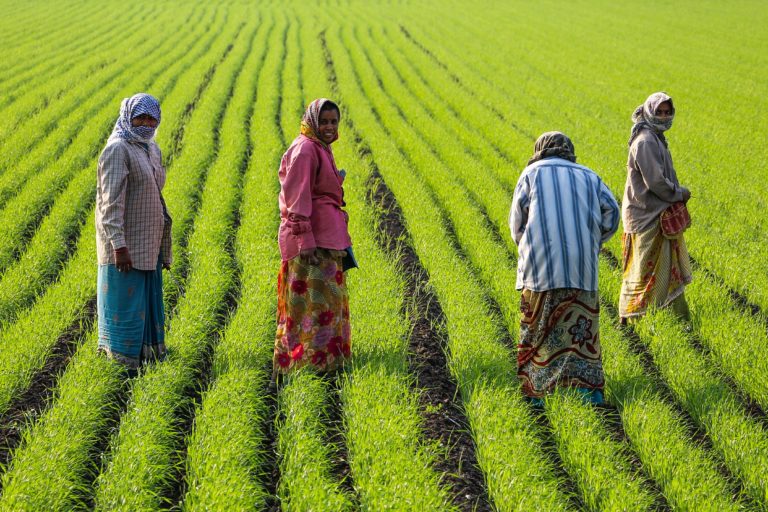
Mulai Pari is a folk song written, composed and sung around the theme of fertility. These songs are written with a mutual connection between Mother Earth and the child-bearing mother. It draws similarities between a mother and an agricultural field. The song describes the growth of a foetus and expresses a wish for a child as well as for seed germination. The Mullaipari festival, or the germination festival as they call it, is prevalent in the northern districts of Tamil Nadu. Many theories of anthropologists and historians cite examples of rituals and folktales that suggest a strong connection between the process of human conception and childbirth on the one hand and the germination of seeds on the other. The Mulai pari festival is also in such a connection that is widely celebrated in the villages of Tamil Nadu. The charm song attached below explains the connection between the two.
She will beget a girl in her first delivery.
The baby will be named after her grandmother,
In the first month (in the mother’s womb), it will be like a bud.
In the second month, it will grow like a pearl.
In the fourth month, it will grow like a ‘belad’.
In the fifth month, it will be like panchevarne (a parrot)as In the sixth month, it will grow.
Women and folk songs.
The women in folk songs and their position in society are interrelated. Many of the folk songs of the 20th century repeated the fact that women had no freedom of thought or action of their own. Scholars like Uma Chakravarthy and Tanika Sarkar have discussed and researched the plight of women and their social conditions in detail.
‘There is no other god on earth for a woman than her husband. The most excellent of all the good works she can do is to seek to please him by manifesting perfect obedience to him. Let his defects be what they may, let his wickedness be what it may, a wife should always look upon him as God.
– An excerpt from a regional magazine in the year 1928
The world has always associated fertility with goddesses. The deities were all women, and the earth was considered feminine. Maternal inheritance was practised all over the world. In agricultural societies, women were predominant, not just as a signboard. but also had an active role to play. They participated, took leadership roles, and had a definite role to play. But with shifting technologies, men came to hold important positions. His labour was prioritised over hers. In the matriarchal form of social life, their period of menstruation was considered a period when they could induce fertility; in patriarchal society, she was believed to cause withering of plants if she approached them. Thus, the reversal of status was complete. She was portrayed as polluted and was successfully pushed into the Bound.
Crushing forest chillies, I prepared curry for him; complaining that the curry is not tasty, he beats me, closing the doors.
He knew I had a few years of schooling when he married me.
He beats me, breaking my waist, saying that I do not know how to prepare congee.
He was charmed with my complexion; he used to say that on pinching my arm, it became red at that spot.
He now beats me, saying that I do not know how to cook rice.
Natukai Pattukal:
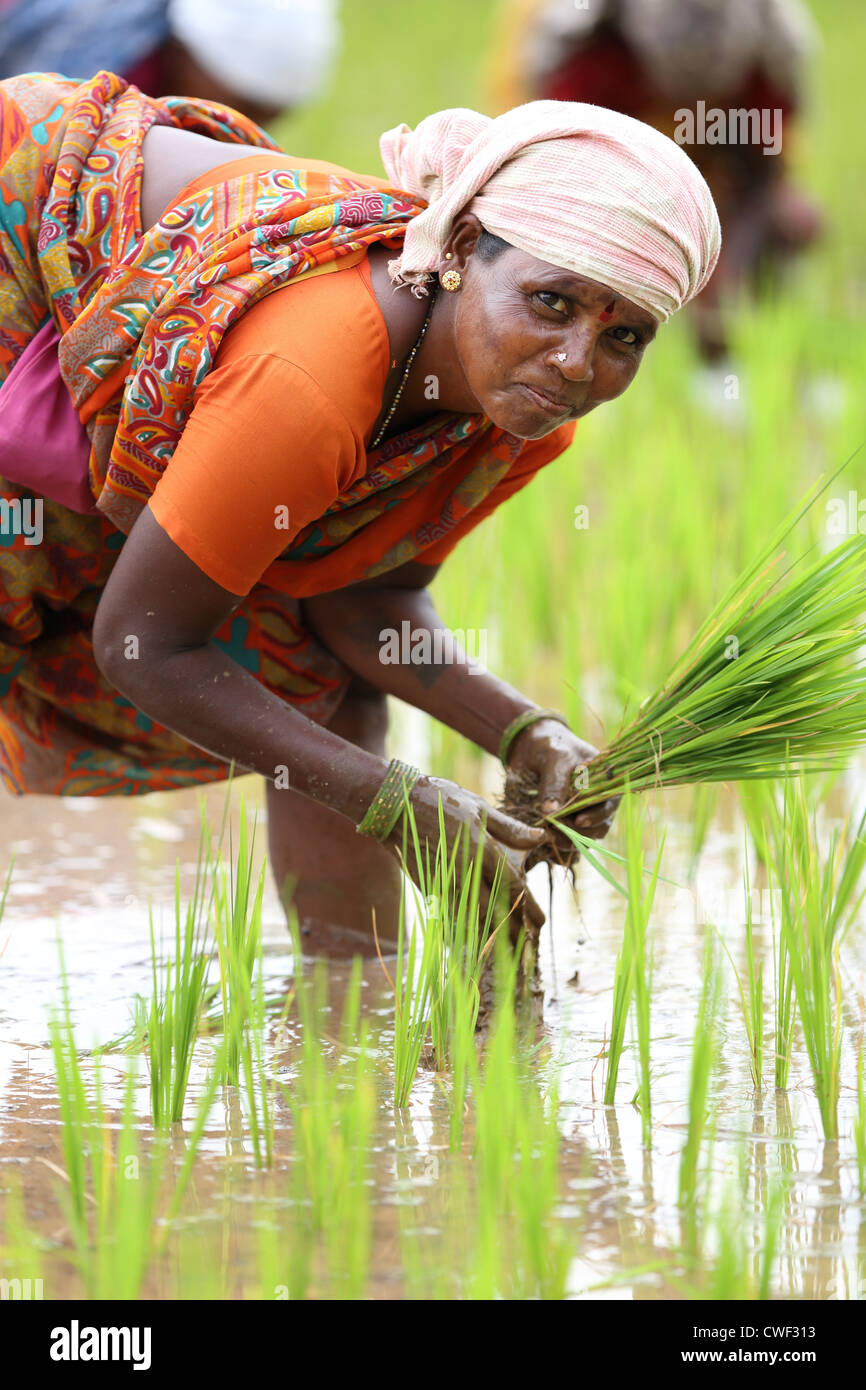
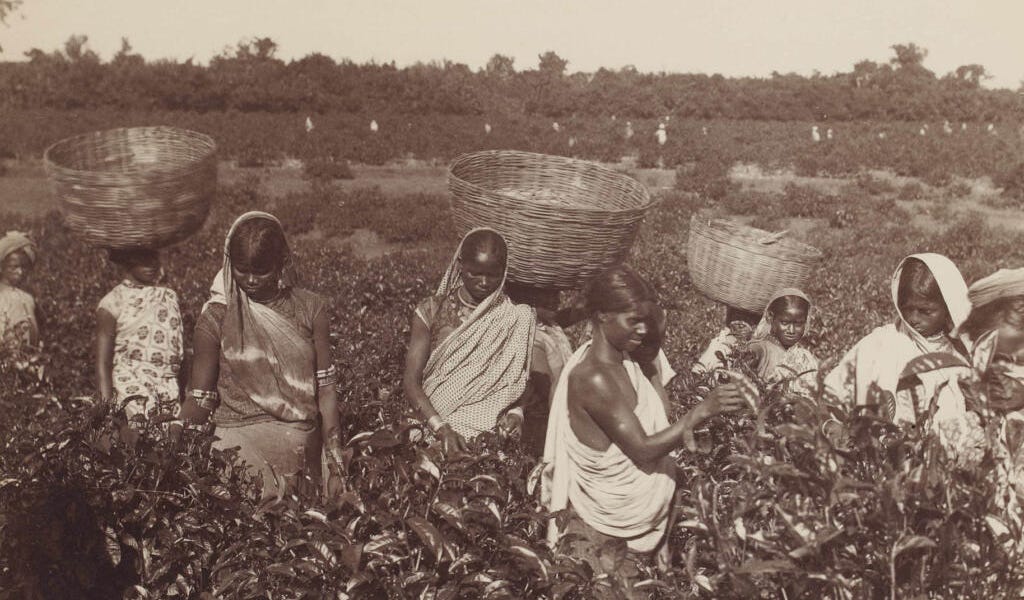
The transplantation song ‘Natukai Pattukal’ was sung by women in the plantation and agricultural sites to relieve their stress, share their sorrows and their daily struggles. It later became an every important source to study the conditions of the women of the period and the culture they represented. The history of tea cultivation in colonial India serves as a compelling example of how economic exploitation, legal systems, and racialised violence were intricately intertwined in the British colonial project. The British turned the indigenous tea plant, Camellia sinensis, into a lucrative commodity, but the establishment and growth of the tea industry was not simply about agricultural innovation. It was built on the backs of an oppressed labour force subjected to harsh working conditions, legal control, and brutal forms of violence
With flowers in my hair, the agent brought me here. He kills me, putting me to back-breaking labour.
I went to the cardamom plantation; I worked there for seven or eight days.
Then I left for my home, drawn to the green fields of my village.
Tears flowed down my cheeks and breasts. I have seen cardamom plantations.
I have seen coffee plantations. Cruel famine drove me from my village to the plantations of Kombai and Pannaipuram.
Hero culture in Tamil folk songs:
A hero described in a folk song is naturally gifted. He has the ideal body, charm, wit and character. He wins battles, he crosses mountains and reaches the other side of the river through storms and rain. He is not scared; he is similar to a lion, he is wild but never devoid of wits. Right from epic classical literature to folk representations, this is the hero we get. But scholars notice a variation in how hero differs from one geographical and political landscape to another. While a civilised hero is godly and supreme, he differs from a tribal hero who is so full of rage and fire. Some of the famous Tamil folk song heroes include Muthuppattan, Chininaththambi, Chinnanadan and Kouthalamadan. These folk heroes, their story ar not confined to literary elitism, but rather becomes a site of history and patterns of social resistance as they question the social ethos. Every single one of their stories, when read in detail, questions the ethos of society and the status quo established, creating fleeting moments of dissent.
Conclusion:
While trying to understand any form of folklore lore, it is also important to understand the people who created the lore. At present, the folk songs are taken out of their setup and are made mainstream with the help of artists and social platforms, while it is not without its positive outcome, one can not help but also fear for the assimilation it endures to fit the taste buds of the larger masses. Many modern-day projects have begun across the state where young artists uncover regional folk songs and give them a whole new voice, and preserve them before they become extinct. Reviving folk music and decoding its meanings have thus become not only the preservation of an art form but also an important source of oral histories of different eras.