



Introduction
Maharashtra has rich and glorious history in all the areas of it. Many art and artists emerged from the land of the soil of Maharashtra. Some of the art form are made and woven with love such one of the art form emerged in the lakes of the most historic city of Maharashtra which is Kolhapur. The famous Chappals from Kolhapur known as” Kolhapuri Chappals” are the best example of strength and endurance. This chappals are also famous in the countries outside Maharashtra.

Origin and History
The art form dates back to 800 to 900 years. This art form emerged in the small village of Kolhapur in Maharashtra made by the community which was used to make the strong, durable and long lasting chappals for the daily use of the people. the people living in the hard terrain of Maharashtra the chappals of shoes they used should be hard and full of strength. Earlier these chappals were made in the villages of Kapshi, Kudal, Athani, and Ichalkaranji. The chappals were earlier known as the kapshi chappals were they were actually originated from. The chappals were initially made from the vegetable tanned leather using natural substances such as babul (acacia), myrobalan, and natural oils. This traditional method of tanning was more durable and provided chappals strength. During the maratha period the leather trade began to flourish. The maratha soldier preferred the chappals with thick soles for the long route travel and war zones. By the time British entered India after that the popularity of Kolhapuri chappals started to spread outside of Maharashtra. Traders carried them to Karnataka Gujarat and other parts of India. As the growing Artisans the styles also increased and each style (Puneri Kachkadi Bakkalnali Pukari) had their own design and different thickness of straps.
Motifs
1. Materials used
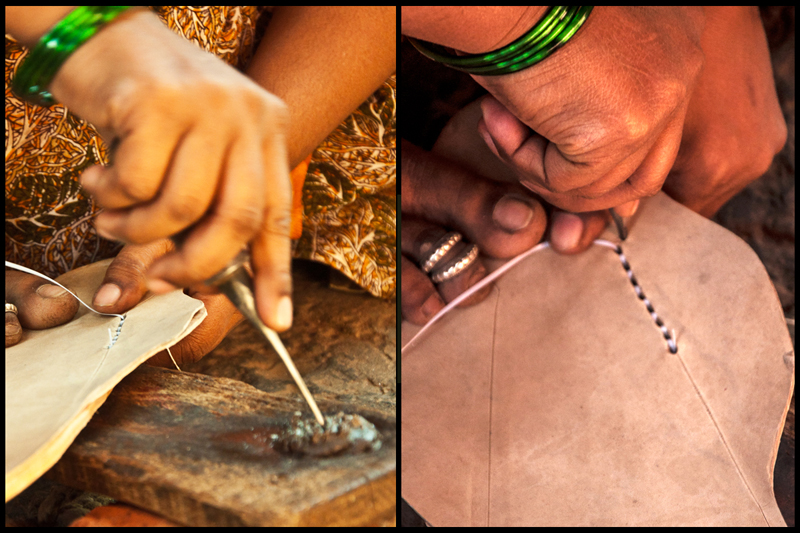
The artisans used the timed bounded methods to make the chappals more flexible, durable and long lasting. The material used to make the chappals are traditionally the leather of buffalo hide for the sole as it of thick and goat leather for the upper surface as it is soft and easier to shape. Today the artisans have shifted to the eco-friendly leather where it is free from harmful chemicals. The benefit of this material is that is becomes softer with the time. The chappals are often famous for their natural colours or polish for that they use vegetable tanning, natural oil and the herbal agents like babur, hirda. First the leather is brought, cleaned, and then tanned. After the leather is taine the leather is processed to make if less harmful, the next process includes the cutting the soles and making them hard for more durability. next comes the stitching and designing the chappals. And the designs are made on the chappals.
There are specific tools used for the making of these as it plays an important role in shaping the chappals. Country hammers, punches, stamps, Rappi, Asti(hammer), Thodapaekapathi, Palagana (Kargoti stone), Kurpa (hasiya) and Setall (aari), Red Colour Flower, Chunna(limestone)Sisal leaf(cactus). Some of these tools are used to hammer the leather to make the leather soft for the upper part and the hard for the upper part, some tools are used to make the design on the chappals which make the chappals look beautiful, some are used to cut the cotton thread.


2. Features
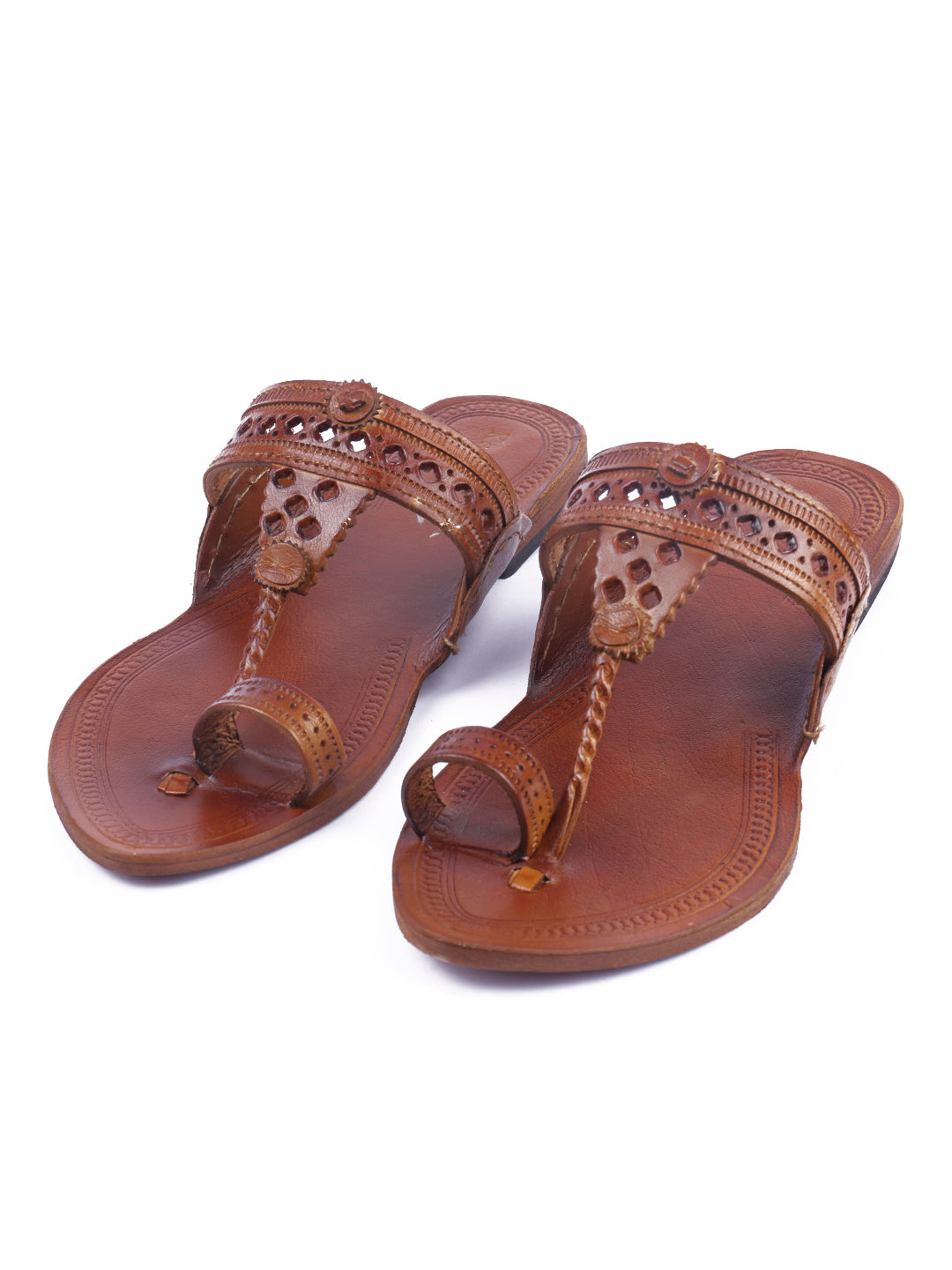
As we know that the make use of these chappals were to make the long route travel make comfortable, so the specific design of the chappal if is mode durable and comfortable to use. The (T) shaped strap of the chappal wove the strong strap to the foot and the thumb give the gives the firm grip which makes chappals mode comfortable. The strap at the middle which is called patti which make this chappals look royal. These chappals make the, Maharashtrian culture make the culture standout and make the handmade product more valuable.
3. Types
There are different styles of the chappals
- Kachkadi
- Bakkalnali
- Pukari
- Paytaan
- Kapashi
Each of the style has a different speciality. Kachkadi is the traditional type of the chappals which include the t shaped strap a thumb and a hard sole with the soft top with simple designs. Bakkalnali in which bakkal means the strap. in this type the strap is thick and the edges of the footwear is thick which give the heavy look and also include the heavy design. the punkari design is the most different in which the front of the footwear is rounded and is light in weight than other types with simple designs. paytaan is the type which is the most traditional of all the types often paired with the traditional out fits. These are made with the light weight and light colour leather with makes it a piece of elegance. often wore on special occasions. Kapshi is one of the oldest form of Kolhapur chappals originated in the village of kapshi. This is most sturdy type amongst all others primarily made for the farmers and the travers because of its toughness and minimal design.
Conclusion
Kolhapuri Chappals are really special because they have been used from generations. They are a part of Maharashtra’s heritage and culture. When you wear Kolhapuri Chappals you can see how well they fit with who you’re where you come from. People who make Kolhapuri Chappals are skilled. They use leather to make these chappals and this art is passes from generations to generations. Every pair of Kolhapuri Chappals shows how effort and love the people of Kolhapur put into making them. Kolhapuri Chappals are an example of what makers can do. Kolhapuris are special because of the way they look. They show us a way to live that’s simple and does not hurt the environment. We live in a world that’s always in a hurry to get new things and be modern. Kolhapuris are an example of slow fashion and the skill of making things perfectly by hand. The conservation of Kolhapuri Chappals is, thus not only about
References
- https://en.wikipedia.org/wiki/Kolhapuri_chappal?utm_source
- https://kolhapurdistrict.in/kolhapuri-chappal-history/?utm_source
- https://www.dsource.in/resource/kolhapuri-chappal/making-process/chappal-making
- https://sthapatya.co/leather-tales-kolhapuri-chappals/
- https://timesofindia.indiatimes.com/city/kolhapur/kolhapuri-artisans-seek-recognition-after-prada-showcases-traditional-chappals/articleshow/122097797.cms?utm