


1. Introduction:
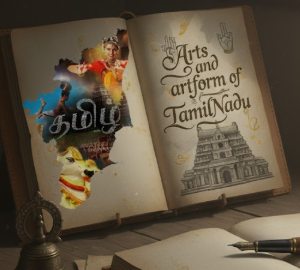
The state of Tamil Nadu is known for its indigenous art forms of dance, music, paintings and sculptures. Bharatanatyam is one such indigenous classical dance form that can be dated back to 300 BCE. It is also known as ‘Bharatam’. It is a dance that is performed with a combination of facial expressions and elegant moves. Nowadays, Bharatanatyam has become an essential part of Indian history and culture. These dances are performed in temple festivals and at the beginning of many official government events. These dances are also performed at the beginning of many schools and college programmes. Even though this art form has suffered a lot throughout history, it has now been recognised as one of the most important and precious dances of India.

2. Birth of the dance:
Let us go through the history of the ‘Bharatanatyam’ – the meaning of its name, the origin of the dance, and its rebirth after the ban imposed by the British rulers.
2.1. Meaning of the name:
The word saw its origin from the Sanskrit word ‘Natyam’, which means dance, and ‘Bharata’ – split into three parts as ‘Bha’ (emotions), ‘Ra’ (melody/Raga), and ‘Ta’ (tala and rhythm). The name itself tells how the dance is performed. People dance in accordance with tala (rhythm) for melodious devotional or non-devotional songs with very realistic body and facial expressions.
2.2. The origin:
The dance was originally known as ‘Sadir’. Then it was renamed Bharatanatyam in the year 1932. The dance form originated from the text ‘Natya Shastra’. Initially, this dance started with people performing in South Indian temples. It is said that ‘Devadasi’ (the people who dedicated themselves to God) were the ones who performed this dance in the earlier days. This dance usually lasts for 2 hours.

2.3. The ban and the rebirth:
This dance was banned by the British government in 1910. The adoption of Anglo-Indian laws imposed certain restrictions and regulations on certain expressions of sexuality, and more so, regulations on bodies and sex in general, which in turn affected traditional dance practices. But the Indian community protested this ban, and finally, brought back ‘Bharatanatyam’ into the society. But this time, it was extended beyond temples. It saw a transformation from being a traditional Hindu dance to a cultural dance symbol of Tamil Nadu. Later, the Thanjavur Quartet developed the basic structure of modern Bharatanatyam. They formalised it more. From then on, ‘Bharatanatyam’ became people’s favourite, and many started learning this art form.

3. Cultural significance:
‘Bharatanatyam’ has a huge cultural and historical significance. In this section, let us see elaborately about how the dance is performed, its costumes, and its presence in literature.
3.1. Movements and steps:
Nritta, Nritya, and Natya are considered as 3 important steps of the dance.
- Nritta: This part specifies where the dancer performs pure dancing moves – they give attention to speed. They follow the rhythm and pattern of the music played. This is like the perfect dancing form.
- Nritya: It is the additional aspect to Nritta where the dancer inculcates the spiritual themes, adding feelings to their dance steps. They make expressive gestures along with perfect dancing moves. The body movements are harmonised with the musical notes played by the guru or by a group of musical instruments.
- Natya: It is usually a team performance of Bharatam, but can also be done solo. The dancers use some standardised body movements to portray a new character. It includes all the elements of Nritya.

3.2. Arangetram:
It is a solo debut performance by a male or female to indicate that they have completed their initial formal training on this dance form. The term “Arangetram” means “Ascending the stage”. It is usually performed after learning Bharatam for 5-10 years. It is the stage where the dancer showcases their dedication and skills, which they have developed over the years by learning Bharatam. It is performed to show respect for the art form. The ‘Arangetram’ tests the dancers’ concentration and stamina since they must perform for three hours continuously on the stage.

3.3. The costume:
Starting from the early days, Bharatanatyam dancers wear saris. The front of these dresses will have a special look. It shows the fan-like patterns when the dancer bends the knees or displays more intricate footwork. They usually keep jasmine flowers on their head. They wear leather straps (known as ‘kolusu’). They wear big earrings, necklaces on their neck, bangles on their hands, and an ‘otiyanam’ on their hip. The sarees worn by the women have decorated zari.

The costume of a male Bharatanatyam dancer is a white cotton cloth draped around the legs and the bottom half of the body like a dhoti. During performances, the upper body of the male dancer remains bare. Male dancers typically do not wear stitched costumes.
Both men and women wear jewellery while dancing. They also wear makeup: blush, lipstick, and thick eyeliner. Dancers also wear red Kumkum, which makes them more aesthetic in appearance.
3.4. Performance:
There are 6 portions in this dance. They are known as Alarippu, Jathiswaram, Shabdam, Varnam, Padam, and Tillana.
- Alarippu: It means ‘bloom’ in Tamil. It is the beginning portion of a performance. It is viewed as a warm-up for the dancers before performing the actual dance, which usually lasts for many hours.
- Jathiswaram: It doesn’t convey any special message, but the dance movements become very complex and aim to bring out the best skilled movements of the dancer.
- Shabdam: Aimed at honouring Lord Krishna, it contains both Nritta and Abhinaya (expression).
- Varnam: It is the most challenging part of the performance and lasts for 45 minutes to 1 hour. It depicts beauty and grandeur.
- Padam: These are the portions where people convey the emotions and the content of the dance, sentiments. It is done very slowly, aimed at making people understand the concept of the dance.
- Tillana: It has graceful movements. This typically ends in a fast-paced rhythm that mesmerises the audience.
Pushpanjali and Mangalam are also kinds of performances.

Bharatanatyam can be performed by a solo or a group of people. It is not restricted to females or males. Anyone of any religion or sex can learn it. These people recite facial expressions and body expressions that depict the stories of Ramayan, Mahabharat, and different Puranas.
3.5. In literature:
The legendary novel ‘Silapathikaram’ mentions the pre-defined structure for performing Arangetram. It includes the story of a dancing girl named Madhavi, describing her dance training regimen, Arangatrau Kathai, in verses 113 through 159.

Literature and sculptures show Lord Shiva performing this dance. This doesn’t restrict Hindus to learn it. Anyone, irrespective of their religion, can learn this art, which promotes secularity.
The eastern gopuram of Thillai Natarajar Temple, dedicated to Lord Shiva, is adorned by sculptures of 108 Bharatanatyam poses that are carved into small rectangular panels. Additionally, inside one of Karnataka’s Badami cave temples, Lord Shiva is depicted in a 5-foot-tall sculpture as Nataraja, performing the Tandava dance. This sculpture includes the 18 arms of Shiva expressing mudras (hand gestures) included in the school of Bharatanatyam.

4. Current scenario:
In pop culture, the art forms are shown in movies. Even in superhit Malayalam movies like Manichitrathazhu, they depict people performing ‘Bharatam’ as a sacred dance. Also, Tamil movies like Senthamarai (1962) and Sringaram (2007) portray people performing Bharatam. From the past to modern times, ‘Bharatam’ is shown as a symbol of cultural heritage.

Apart from movies, there are several schools in each and every district of Tamil Nadu to teach ‘Bharatam’ for anyone, irrespective of age. People dancing ‘Bharatam’ portray their skills on social media platforms such as YouTube and Instagram. They post their Arangetram to show their pride of being a Tamilan and to show the cultural significance. These shorts and movies inspire many to learn this art form, preserve it, and promote it.

5. Conclusion:
Bharatanatyam is a dance form that has its legacy from the early days. It had its fall during the British colonial period. But it survived as Indians were determined to preserve their traditional arts. Currently, ‘Bharatam’ is the symbol of Tamil Nadu. In any event, Bharatanatyam is performed first to depict the cultural significance of Indians. The dancers speak emotions along with history. Let’s preserve this art form forever by learning it and passing it to our upcoming generations.
